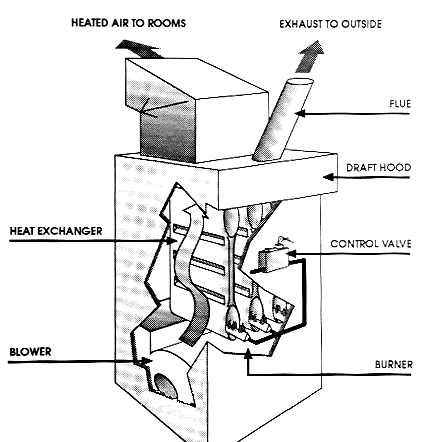
38 furnace cold air return diagram
Cold air return in basement? - GreenBuildingAdvisor From the HRV "intake outside air duct" there is a dedicated duct that goes directly into the furnace's cold air return. All exactly as in the diagram. What the diagram doesn't show (as far as I can see) is how the cold air returns feed back into the heating system. I have two floor cold air returns on the upper level. They both feed back into ... How an Electric Furnace Works - HomeTips An electric-resistance furnace works like a big hair dryer. As with a gas forced-air furnace, it has a blower that draws air into the cabinet through a cold-air return and then pushes the air through the heat exchanger. There, electric heating elements heat the air, and the blower pushes the warmed air back into rooms through a system of duct work.
Learn How To Install Return Air Duct In Your Home A return duct is the part of the system that carries the air back to the furnace or air handler where it will then be circulated back out through the supply ...

Furnace cold air return diagram
How to Tell Which Side Is the Return Air of the Furnace? 1. Locate the furnace filter air box. The filter is always put in an air box on the return air side of the furnace. Whenever you change the filter, always change on it the return air side. 2. Stand... The Location of Cold Air Return Vents | Hunker Step 2 Place your cold air return vents on the inside walls of buildings at the lowest point. The return vent pulls cold air from the bottom of the room and returns it to the furnace to be reheated and returned as warm air. Unlike supply vents, return vents do not need to be cased in metal. A Complete Guide to Home Ductwork Design | Stack Heating Install return grilles on each level. For the most efficient results, install smaller air grilles in each room with registers to maximize air distribution and comfort. Try jumper ducts and transfer grills to enhance air distribution. Sealing and Insulation Tightly seal all duct joints with mastic and fiberglass mesh and/or aluminum tape.
Furnace cold air return diagram. furnace cold air return vent placement | DIY Home Improvement Forum "furance cold air return vent placement" The best place for a FURNACE cold air return vent is down low, as that is where the colder air is, as cooler air is denser and hot air will sit on top of the dense air. T thehvacguy Still Learning Joined Oct 30, 2009 338 Posts #5 · Mar 15, 2011 Wait for input by beenthere, he will have the right answer B HVAC Return Air Ducting - Ask the Builder Supply air from furnaces and air conditioners should be on outside walls. The return air vent openings need to be on the opposite side of the room so the conditioned air is pulled across the room. If the supply ducts are in the floor, then the return air should be located up high. This pulls the air across your body. How to Modify Cold Air Return Ducts for Efficient Heating ... - Sobieski First, locate your system's return and supply ducts. Return ducts are located inside your home, and there should be one in every room. However, many older homes will likely have fewer returns. In contrast, supply ducts are located on exterior walls. Measure each one, and note the difference in size. Modify Cold Air Duct Sizes Cold Air Return Vents: What They Are, How Many Do You ... When we figure out how many CFM does our furnace output, we have to match that output with CFM input. Here is where the number of cold air vents comes in: A typical return vent is 16 inches by 20 inches, according to Hunker. It includes the cold return air duct grille.
What is a Cold-Air Return? (with picture) - Home Questions Answered A cold-air return is a vent that sucks cold air into a furnace so that it can be heated and brought back to a room through a furnace register. These vents are seen in many types of furnace systems, although there are alternatives, such as drawing air from the outside or from the area around the furnace. The Air Return Size for a Furnace | Hunker A typical supply vent is 4 by 10 to 12 inches and a typical return vent is 16 by 20 inches or larger. Houses often have two or more return collecting points, each with a filter, which join before re-entering the heating unit. Two-story houses will have one return downstairs and another upstairs. Return Locations Combustion Air Duct Connected to the Return Plenum Apr 9, 2013 — A combustion air duct connected directly to the furnace return ... air duct that terminates at the floor will allow cold air to come in to ... HVAC Ductwork Design Guide (Layout, Duct Size & CFM) To calculate the airflow requirement for the living room, divide 9000 BTU by 30 and the result is 300 CFM. Repeat the airflow calculation process for the rest of the room. 2. Design the Supply and Return Grille Location The location of the supply and return grille determines how you will run the supply and return duct.
HVAC Essentials: What is a Return Air Vent For? | FAMCO Older and newer homes often have one register per floor, but homes built from 1960-1990 may have a cold return air vent in each room. The high capacity and high efficiency furnaces allow the contractor to install fewer returns and still maintain efficient air return. Return air vents require very little maintenance. The suction that causes the ... Why Is My Furnace Blowing Cold Air? How To Fix [With Pictures] First and most importantly, make sure your thermostat is set to Heating Mode. Next verify the thermostat's fan setting is set to AUTO, not ON. If it is set to ON, that may be your problem- switch it immediately. The ON setting makes the furnace fan blow continuously, even when the heating cycle is not activated. How Do I Know Which Direction to Install My Furnace Filter? Stand in front of the furnace and look for the ducts. Pull the old filter out and discard it. On the new filter, find the arrow indicating the proper airflow direction. The arrow must face toward the furnace and away from the return duct that pulls the air in need of heating or cooling. It's smart to draw the airflow direction arrow with a ... Duct air flow: HVAC system return air & ... Quick Simple Check for Air Flow at Return Registers A simple test for air movement at the return air inlet is illustrated in our sketch. Just hold a tissue or piece of toilet paper near the inlet grille face. If air is moving into the grille the tissue will be pulled against the opening. Sketch at left courtesy Carson Dunlop Associates.
AJAX Home Inspections • Helping you to know your home...: January 2011
Building Cavities Used as Supply or Return Ducts Inspectors can learn how air leakage from ductwork may cause home energy loss, increase utility bills, lower comfort levels, and make the HVAC system less ...
Old Furnace Wiring Diagram - Wiring Diagram
HVAC System Diagram: Parts, Components (The Best Guide) | Clover Services It is a vast network of tubing that carries air from the air handling unit to the rest of the house. This part of your HVAC diagram works harmoniously with the return ducts system to ensure that the air in your house is at the desired state. • Dampers A damper is also a crucial part of your HVAC components diagram.

Forced Air Heating Furnaces: What Are They and When Should You Replace ...
HVAC System Diagram: Everything You Need To Know - Gee Heating & Air First, warm air blows across the indoor evaporator coil. The heat energy then transfers to the refrigerant inside the coil. This transfer cools the air that passes across the coil. The unit then pumps the refrigerant from the evaporator coil back into the compressor and continues to repeat the cycle.
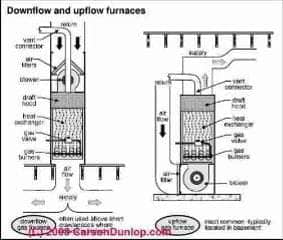
Dianose & repair warm air heating furnaces: how does a furnace work?
What is the Role of Cold Air Returns in the Heating Process? Cold air returns are what allow your furnace to "inhale" your home's air. These registers are typically located low to the ground in different areas around your home in order to capture the cold air that sinks to the floor. When warm air is delivered to a room, the existing cold air in that room is pushed into the cold air returns.
0 Response to "38 furnace cold air return diagram"
Post a Comment